Adaptive Cycling Slovenia: 7 Steps to Test, Fit & Find Local Support
· 9 min read
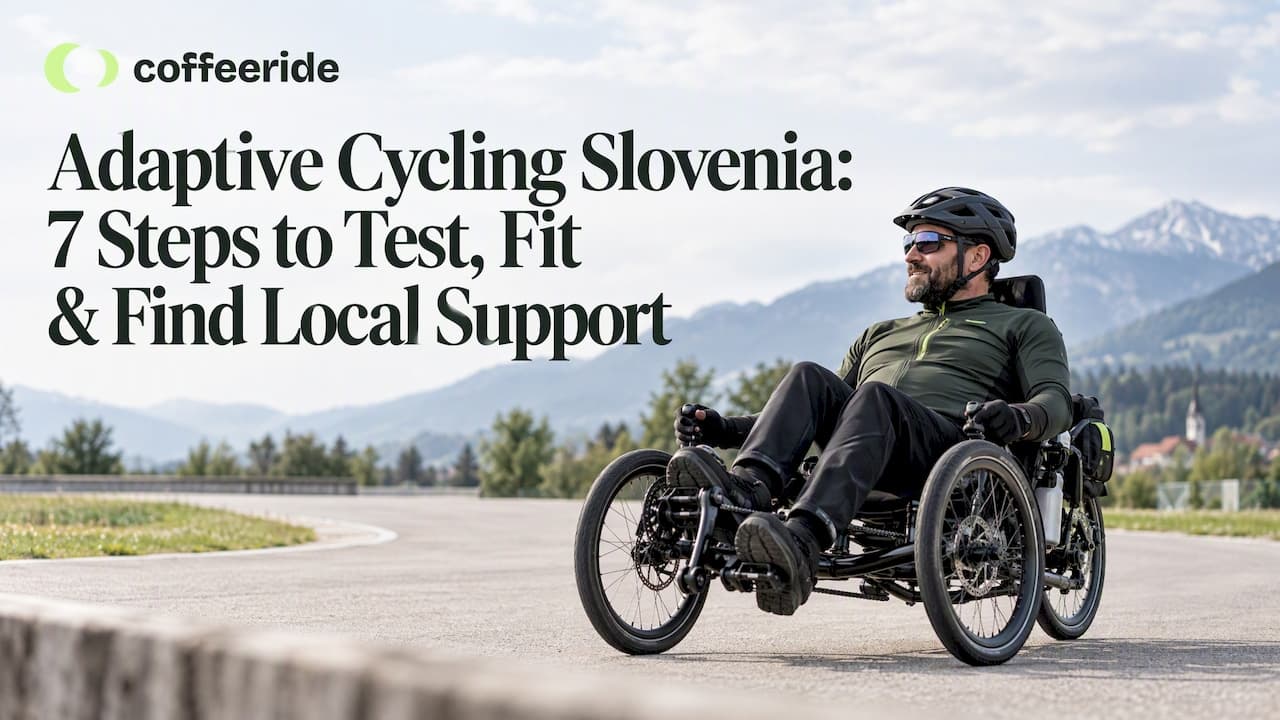
Adaptive cycling equipment covers handcycles, recumbent and upright trikes, tandems, wheelchair-bike conversions, and e-assist systems, each built to match a different combination of strength, balance, and control needs. If you’re exploring options, the single best next step is a professional assessment paired with a hands-on trial, since fit and training matter more than any spec sheet.
TL;DR:
- Proper fitting through a professional assessment is crucial to ensure comfort, safety, and adaptability as bodies and goals change over time.
- Safety checks should include secure seating, proper harnesses, aligned controls, and accessible emergency brakes, with staged practice to minimize risks.
- Adaptive accessories like foot straps, adaptive pedals, and postural supports are essential for usability and confidence during long rides.
- Testing equipment with structured, short supervised sessions helps accurately judge fit, control, and comfort before making a purchase decision.
- Community programs and accessible routes, such as local pilot projects and inclusive trails, support ongoing use and social connection beyond initial equipment setup.
Table of Contents
- 1. Types of adaptive cycles and who they suit
- 2. Safety, fitting, and clinical assessment
- 3. Common accessories and adaptations that expand usability
- 4. How to choose and test equipment before you commit
- 5. Where to try, rent, or get funding support
- 6. Evidence and expert guidance behind adaptive cycling
- 7. Why community support matters as much as the equipment
- Find adaptive-friendly rides and mentors near you
- FAQ
- Sources
1. Types of adaptive cycles and who they suit
Picking the right category starts with how you want to sit, steer, and power the bike. Handcycles, recumbent or upright, use arm-crank propulsion and suit riders with limited or no leg function; recumbent versions sit lower for stability, while upright handcycles give better visibility in traffic. Tadpole trikes, with two wheels up front, offer a wide, stable base for riders managing balance or coordination challenges, and many feature reclined seating that reduces fatigue over longer rides.
Tandems and companion cycles pair a rider with a sighted or cognitively supportive partner at the controls, making them a strong fit for people with vision loss or cognitive conditions who still want to pedal and steer collaboratively. Wheelchair-bike conversions and transport trikes let a wheelchair user roll directly into a docking frame, which removes the transfer step entirely and works well for riders who use a chair daily.
E-assist motors matter for riders who tire quickly, face hills, or want to extend range without overexertion, and they’re increasingly standard on handcycles and trikes alike.
- Handcycles suit riders with strong upper-body control and limited leg function.
- Tadpole trikes suit riders who need extra balance support and a lower center of gravity.
- Tandems suit riders with vision or cognitive support needs.
- Wheelchair conversions suit full-time wheelchair users who want to avoid transfers.
Whatever the category, adjustability and modularity decide whether a bike still fits you in a year, since bodies, strength, and goals change over time.
2. Safety, fitting, and clinical assessment
A physical or occupational therapist assessment typically checks range of motion, postural control, trunk stability, and endurance before recommending a configuration, which is why a proper fitting looks less like a bike shop visit and more like a clinical consult. That assessment then drives decisions on seating depth, crank length, hand position, and whether a caregiver control option is needed.
Before your first real ride, confirm these core safety points:
- Seating and lateral support hold your trunk steady through turns and stops.
- Harnesses or belts secure you without restricting breathing or circulation.
- Headrests are positioned for both comfort and crash protection.
- Hand or foot interfaces line up with your natural reach and grip strength.
- Emergency braking is reachable and operable under fatigue, not just at rest.
Staged practice, short supervised sessions that build duration gradually, reduces the most common risks: pressure injuries from prolonged contact, unexpected fatigue mid-ride, and in some neurological conditions, a risk of heterotopic ossification from repetitive strain. A community-based pilot that used Freedom Concepts Discovery Series cycles built its protocol around exactly this: adjustable seating, low-back support, caregiver controls, and seatbelts, combined with supervised training and school-based therapist support.
Pro Tip: Log your first three rides, noting fatigue, pressure points, and comfort, so your therapist can fine-tune the setup before small issues become habits.

3. Common accessories and adaptations that expand usability
Small adaptations often make the difference between a bike that technically works and one you actually want to ride.
- Pedal straps, adaptive pedals, and footplates keep feet secure when grip or sensation is limited.
- Single-hand controls, wrist supports, and specialized grips let riders with limited hand function brake and steer confidently.
- Lateral pads, headrests, and harnesses add the postural support many trikes and handcycles need for longer rides.
- Lights, flags, and high-visibility flags matter more on low-profile recumbent frames, which sit well below typical sightlines.
- Tailored helmets and vehicle transport fixtures round out the setup, since standard racks rarely accommodate wider adaptive frames.
None of these are optional extras for most riders. They’re what turns a correctly sized frame into a bike you can actually use for an hour, not just ten minutes.
4. How to choose and test equipment before you commit
Testing equipment properly takes more than a five-minute spin around a parking lot. Follow a structured trial so you’re comparing real data, not first impressions.
- Measure fit basics first: seat depth, crank or hand-control reach, and backrest angle.
- Ride short supervised sessions, 10 to 15 minutes, before judging comfort or control.
- Increase session length gradually over multiple visits rather than one long trial day.
- Record fatigue, pressure points, and control accuracy after each session.
- Ask vendors about warranty terms, spare parts availability, and included training.
- Confirm whether the model is available to rent or loan before buying outright.
- Factor in ongoing costs: battery replacement for e-assist units, tire wear, and routine maintenance.
Purchase versus rental is often the biggest budget decision, especially since adaptive cycles range widely in price and many riders change equipment as their needs evolve. A short-term loan or pilot program lets you test that fit assumption before committing to a purchase.
5. Where to try, rent, or get funding support
Several in-market resources make trialing equipment realistic rather than theoretical. The KOLOINKLUZIJA project, led by Zavod Uvid, develops inclusive cycling tourism models and pilot activities in regions including Rogaška Slatina and Podčetrtek, pairing adaptive equipment with training and accessible routes.
For the ride itself, look for low-gradient, paved paths that remove guesswork from a first attempt:
- The Štrekna cycle path runs 35 km on a former rail line with a gentle, consistent gradient suited to adaptive cycles.
- The Tarvisio to Kranjska Gora handbike route is a barrier-free, cross-border option built with handcycle users in mind.
- Community pilots and municipal programs occasionally offer short-term loans, so ask local disability or cycling organizations before assuming you need to buy.
- Bring a support person, weather-appropriate layers, and any personal seating cushions or supports to your trial session.
6. Evidence and expert guidance behind adaptive cycling
A 2026 Frontiers study found that adapted cycles support participation, wellbeing, and social inclusion, but success depends on fitted equipment, training, and maintenance rather than the hardware alone. That finding lines up with how equipment is classified and selected: the ISO 9999 assistive products standard provides the international taxonomy clinicians and suppliers use to match riders with the right category of device. The practical takeaway across both sources is consistent: individualized fitting and ongoing support matter more than brand or price point, and cost or access barriers remain the biggest obstacles to adoption.

7. Why community support matters as much as the equipment
Equipment gets you moving, but community gets you riding regularly. Group rides and mentors who’ve already solved the transfer, transport, and pacing problems cut months off your own learning curve. If a local pilot program or accessible route is nearby, go try it, ideally with a support person alongside you.
— Coffeeride
Find adaptive-friendly rides and mentors near you
Once you’ve got equipment that fits, the next challenge is finding people to ride with who understand your pace and needs. Our platform helps you post rides, browse local clubs filtered by discipline and pace, and connect with riders, including para-cycling groups, who know the routes worth trying.
Our platform won’t fit your bike or run your clinical assessment, but it will connect you with the mentors and group rides that make the difference between owning an adaptive cycle and actually using it every week. Visit Coffeeride Club to browse rides near you or create a free profile.
FAQ
What is adaptive cycling equipment?
Adaptive cycling equipment includes handcycles, trikes, tandems, and wheelchair-bike conversions modified with features like custom seating, hand controls, or e-assist motors to match a rider’s strength, balance, or coordination needs. The right category depends on functional ability, which is best confirmed through a professional assessment.
How do I get properly fitted for an adaptive bike?
A physical or occupational therapist assessment checks range of motion, postural control, and endurance, then guides decisions on seating, crank length, and control placement. Many community pilots pair this assessment with supervised training sessions to build skill and confidence gradually.
Where can I try adaptive cycling equipment before buying?
Local pilot programs such as KOLOINKLUZIJA offer trial access alongside accessible routes like the Štrekna cycle path. Asking a local disability or cycling organization about short-term loans is often the fastest way to test fit before committing to a purchase.
What safety features matter most on adaptive cycles?
Secure seating, properly positioned harnesses, aligned hand or foot controls, and accessible emergency braking are the core safety priorities on any adaptive cycle. Staged, supervised training sessions that build ride duration gradually also reduce fatigue-related risks and pressure injuries.
Does Coffeeride help me find adaptive cycling groups?
Yes, the platform lets you filter rides and clubs by discipline and pace, including para-cycling and inclusive groups, so you can connect with mentors and riders nearby. Create a free profile to browse local rides and events built around your needs.