Activity Club Onboarding Starts With a Welcome in 48 Hours
· 10 min read

The best club onboarding process is staged and multi-touch: a welcome, a few early social touchpoints, and a clear first win, spread across the first 90 days. We’ve watched this play out across cycling clubs and community groups alike, and the pattern holds. Your first move today: send a personalized welcome email and lock in an intro touchpoint within 48 hours.
TL;DR:
- Send three emails in week one, one weekly for three weeks, then monthly for six months, while adding personal contact at key moments.
- Review engagement at 30, 90, and 180 days with brief surveys, and compare ambassador outreach with automated messages using first week attendance.
- Use a tryout ride to assess newcomers’ pacing and group skills before placing them on faster routes, while giving them a low pressure first experience.
- RSVP forms should capture experience or pace, emergency contacts, relevant medical notes, and equipment status, then share etiquette rules before the first event.
Table of Contents
- Why onboarding matters for club retention
- A staged onboarding timeline from sign-up to the first season
- Checklist and templates you can copy today
- Choosing the right channels and cadence
- Measuring onboarding success and iterating
- Practitioner tips for ride-based and activity clubs
- What we’ve learned about the first 48 hours
- Put your onboarding process on Coffeeride
- FAQ
- Sources
Why onboarding matters for club retention
New members who sign up and then hear nothing drift away fast. Research on membership lifecycles frames this as four stages: Recruit, Onboard, Activate, Renew, and the onboard step is where most clubs lose people without realizing it, according to a practical guide to the full member lifecycle.
One association saw a significant increase in new member engagement in the first 90 days after adopting a structured onboarding approach, according to the same lifecycle guide. That kind of lift tracks with what we see in riding groups: members who form a real connection with someone else in the club within the first couple of months tend to stick around, show up to more rides, and renew without a second thought. Structured onboarding also pays off in clearer perceived value and stronger event turnout, because new members know what to expect and who to ride with.
A staged onboarding timeline from sign-up to the first season
Treat onboarding as a sequence, not a single welcome email. Here’s the cadence that works for activity clubs:
- Pre-onboarding (before day one): Confirm the sign-up, set expectations (pace groups, gear, typical distances), and send a link to quick-start resources like a pre-ride checklist.
- Day one: Send a warm welcome email, assign an ambassador or buddy, invite them to an orientation session, and include a short safety brief if the activity calls for one.
- Week one: Follow up with a quick phone call or direct message, then invite them to a low-stakes event, ideally a beginner-friendly group ride with no drop policy.
- First 30 to 90 days: Run a structured drip, the “3-3-6” pattern works well here: three emails in week one, one per week for three weeks, then monthly for six months, a cadence recommended by association practitioners in Start Strong. Mix in targeted event invitations and offer small roles, like helping set up for a group ride, to build ownership early.
- Ongoing: Transition from onboarding messages to regular club communications and start renewal prep well before the membership anniversary.
Pro Tip: Assigning the ambassador before the welcome email goes out helps make the first message feel personal rather than automated.
This structure mirrors staged guidance the National Club Association recommends for private clubs: pre-membership, first 60 days, and the first year, each with its own priorities.
Checklist and templates you can copy today
Keep a running checklist by stage so nothing falls through the cracks:
- Pre-onboarding: Confirmation message, FAQ link, gear and pace expectations.
- Day one: Welcome email, ambassador assignment, orientation invite.
- Week one: Check-in call or message, first event invite.
- 30 to 90 days: Drip emails, role offer, feedback request.
Subject-line starters that work well: “You’re in, here’s your first ride,” “Quick question before Saturday,” and “Your 30-day check-in.” Keep orientation agendas short: welcome and introductions, route or activity overview, safety basics, and a buddy pairing.
| Stage | Key action | Channel |
|---|---|---|
| Pre-onboarding | Confirm sign-up, set expectations | |
| Day one | Welcome, assign ambassador | Email, message |
| Week one | Check-in, low-stakes invite | Phone, message |
| 30 to 90 days | Drip cadence, role offer |
For RSVP forms, include fields for pace or experience level, emergency contact, any medical notes relevant to the activity, and gear or equipment status. Add one etiquette prompt, such as a link to club ride rules, so expectations are clear before anyone shows up.
Choosing the right channels and cadence
Different moments call for different channels. Use email for anything a new member needs to reference later, like checklists or ride rules. Use a phone call or voice message for the first welcome, it lands warmer than text. Use your club’s community platform or group chat for ongoing connection and spontaneous invites.
- First login or sign-up: Trigger an automated welcome email, then a personal follow-up within a day.
- First event RSVP: Trigger a short confirmation with logistics and a buddy introduction.
- No activity after two weeks: Trigger a gentle check-in, ideally from a person, not a bot.
The “3-3-6” email rhythm referenced in association research works as a backbone for this, with phone and in-person touches layered on top for the highest-impact moments.
Measuring onboarding success and iterating
Track a short list of numbers so you know what’s working. Watch 30-day and 90-day engagement (did they show up again), event attendance in the first quarter, whether a buddy connection actually formed, and any signal of renewal intent, like asking about next season’s schedule.
- Review at 30, 90, and 180 days with a one-to-three question survey asking how welcomed the member felt and what nearly stopped them from returning.
- Run small experiments, such as testing email send times or comparing ambassador outreach against an automated message, and compare which group shows higher week-one attendance.
New-member renewal rates often lag the overall club renewal rate, and structured onboarding is what closes that gap, according to association membership research. Reviewing early and often lets you catch a weak step before it costs you a season of members.
Practitioner tips for ride-based and activity clubs
A low-stakes try-out ride works as both an onboarding step and a quiet safety check. It lets a ride leader see how a newcomer handles pacing, braking, and group riding before putting them into a faster or more technical group, and it gives the new rider a no-pressure first experience.
- Give every newcomer a named buddy, not a general “ask anyone” policy. One person responsible for one newcomer changes the whole first ride.
- Run a 3 to 5 minute briefing before rolling out: route, hand signals, regroup points, and who to ride next to. Our ride leader briefing template covers this in a format you can read straight off your phone.
Pro Tip: Pair the try-out ride with a short debrief over coffee afterward. That ten minutes often do more for retention than the ride itself.
Clubs outside cycling run similar staged programs. A martial arts onboarding model built around a structured first 8 to 12 weeks, described in KWOON’s guide to student onboarding, follows the same logic: early safety orientation, a trial period, and a named point of contact.

What we’ve learned about the first 48 hours

The clubs that retain new members aren’t the ones with the fanciest welcome packet. They’re the ones where someone follows up fast. We’ve seen sign-ups go cold simply because the first reply took a week, by which point the new rider had already found another group or given up entirely.
If you do one thing from this guide, assign an ambassador within 48 hours of sign-up. Everything else, the emails, the checklists, the drip cadence, works better once a new member has one person they can text with a dumb question.
— Coffeeride
Put your onboarding process on Coffeeride
We built Coffeeride so club organizers spend less time chasing logistics and more time actually riding. A club page gives you one place to post rides, manage RSVPs, and message new members directly, so your welcome sequence and your event invites live in the same spot instead of scattered across group texts and spreadsheets.
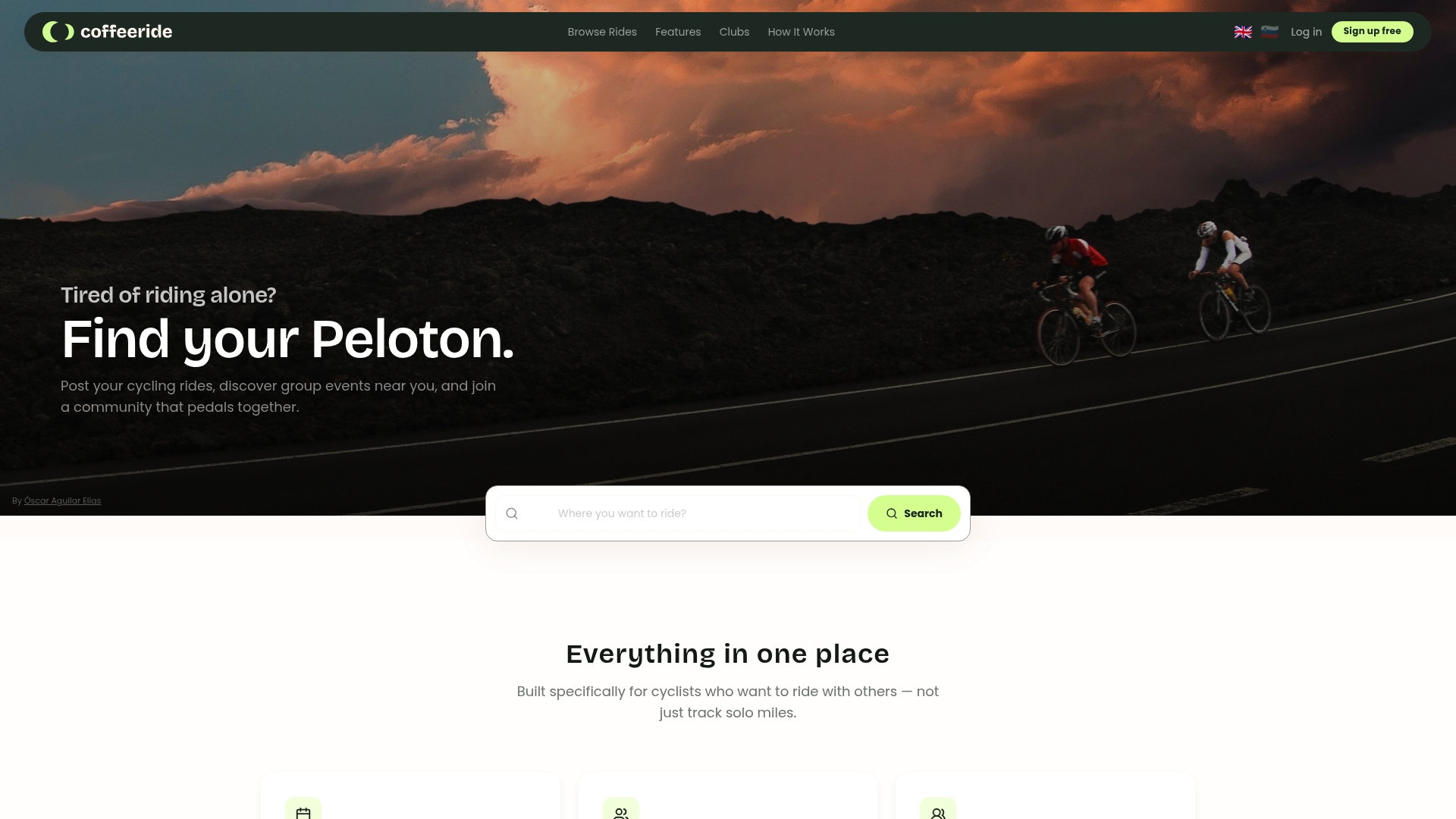
- Create a club page and post a welcome try-out ride with pace and distance fields built into the RSVP.
- Message new members directly inside the app once they sign up, no separate contact list to maintain.
- Filter by discipline and pace so your ambassador pairings make sense from the first ride.
Ready to put a welcome ride on the calendar? Set up your club on Coffeeride and post your first try-out ride this week.
FAQ
What steps are involved in onboarding a new member?
A typical club onboarding process runs through pre-onboarding confirmation, a day-one welcome and ambassador assignment, a week-one check-in and low-stakes event invite, then a structured drip through the first 30 to 90 days. This staged approach follows the Recruit, Onboard, Activate, Renew lifecycle that association research recommends.
What are the 4 C’s of orientation?
Definitions vary across industries, but for clubs the most useful version centers on clarity (what to expect), connection (a buddy or ambassador), contribution (an early small role), and consistency (a predictable communication cadence). This framing lines up with the staged onboarding structure recommended for private clubs.
How long should club onboarding typically last?
Most effective onboarding programs run 90 days to a full year, with the heaviest touchpoints in the first 90 days. The 3-3-6 email cadence extends communication out to six months to keep engagement from fading after the initial welcome.
What happens during pre-onboarding?
Pre-onboarding covers everything between sign-up and the first event: confirming the registration, setting expectations around gear and pace, and sharing quick-start resources like a pre-ride checklist. Getting this stage right reduces the chance a new member no-shows for their first activity.
Can Coffeeride help run a club’s onboarding process?
Coffeeride supports onboarding through club pages, event posting with RSVP fields, and direct member messaging, so ambassadors and organizers can manage welcome communication in one place. Clubs can post a welcome try-out ride and start the onboarding sequence directly on the Coffeeride club page.
Sources
- Building membership that lasts: a practical guide to the full member lifecycle
- National Club Association publishes member onboarding resource for private club leaders