Find Paced Family Group Rides in Slovenia, Schools and Events
· 16 min read
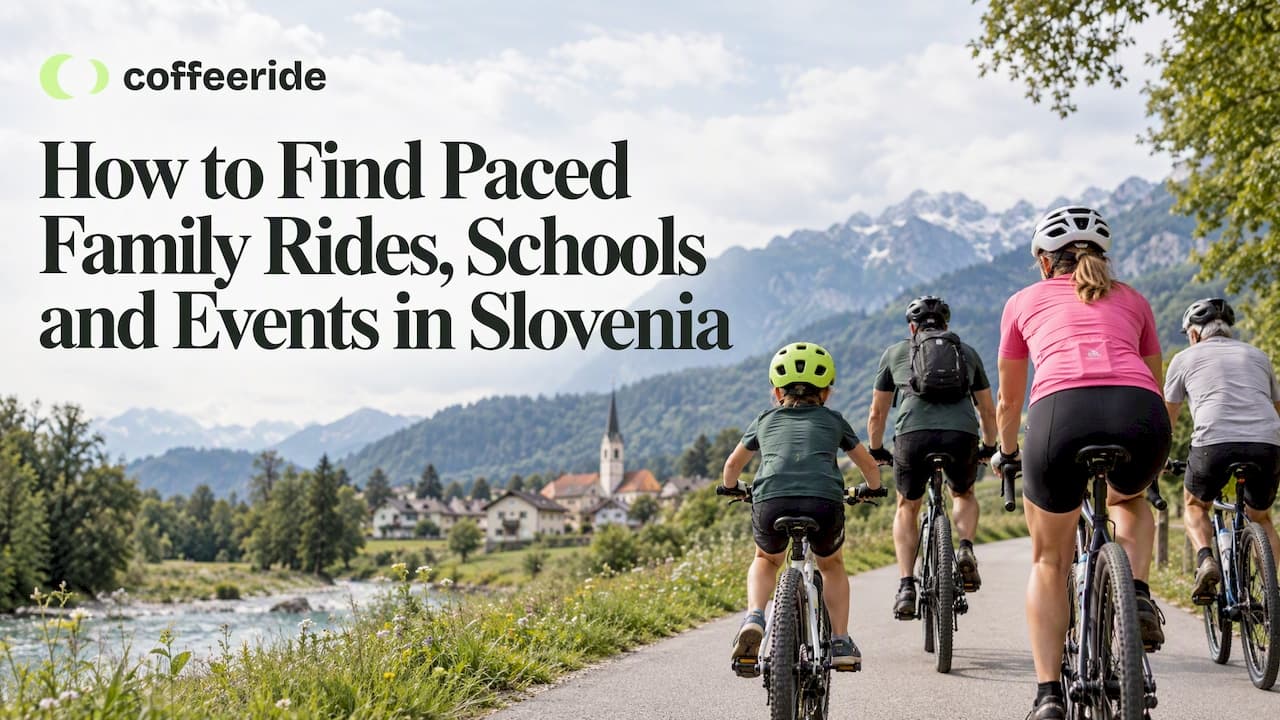
Start with local cycling clubs, organized family events like L’Etape Slovenia, the official route listings on slovenia.info, and community platforms such as Coffeeride. Slovenia has an unusually dense network of low-traffic family routes and a calendar full of organized family rides, so you have real options close to home. Join a platform, pick a pace, and check what’s coming up this month.
TL;DR:
- Most family rides in Slovenia are best found through local clubs, municipal programs, or community platforms that filter rides by pace and difficulty.
- Slovenia offers over 480 kilometers of mainly easy, traffic-free cycling routes suitable for children as young as four or five, such as Lake Bled loop and Parenzana trail.
- Organized events like L’Etape Slovenia provide safe, non-competitive rides with escort vehicles, guided pacing, and clear safety procedures for families.
- Effective route planning includes scouting ahead, building in exits for tired riders, and following safety tips like proper helmet fitting and visibility measures.
- Traveling options are flexible with train and bus policies allowing bikes, but early arrival and local parking information help avoid congestion, especially during peak seasons.
Table of Contents
- Where families actually find group rides in Slovenia
- Family-friendly routes and real ride examples
- How family cycling events and festivals work
- Safety and children’s cycling education in Slovenia
- How to join or start a safe family riding group
- Coffeeride explained: a local tool for finding family rides
- Seasonal considerations and weather for family rides
- Getting there: transport and parking for families with bikes
- Organizer perspective: a first family ride that actually worked
- Coffeeride Club: find family rides and manage your club
- Sources
- FAQ
Where families actually find group rides in Slovenia
Finding the right group starts with knowing which channel fits your family’s style. A quiet lakeside loop with grandparents calls for a different search than a festival weekend with teenagers who want a bit of distance.
Local cycling clubs and municipal family programs are a solid first stop. Many towns run seasonal bike programs tied to schools or community centers, especially around Bled, Radovljica, and the Soča Valley. Call or message the club directly and ask three things: average group pace, typical route length, and whether a kids’ subgroup exists. Clubs that welcome families usually say so upfront, with a contact person who answers these questions without hesitation.
Facebook groups and Instagram event pages fill the gap between formal clubs and ad hoc meetups. Before you commit, check who’s organizing: a named admin, a history of past rides, and comments from people who actually showed up. Skip anything vague about meeting points or escort arrangements. A well-run family ride post states distance, pace, and what to bring, not just a date and a smiley.
Community platforms built specifically for group riding solve the matching problem that social media can’t. Some cycling platforms let you filter rides by pace, discipline, and tags to help families find suitable rides. Pace matching matters more than most new riders expect: a mismatch between a confident adult pace and a seven-year-old’s stamina turns a fun morning into a stressful one. Filtering by tag before you ride saves everyone the awkward first ten minutes of realizing the group isn’t right.
Tourism pages like Slovenia serve a different purpose: they’re best for route research and trip planning, not live coordination. Use them to scout a route, then use a club, event listing, or community platform to find people to ride it with.
- Local clubs and municipal programs work best for recurring, regular rides near home.
- Social media groups suit one-off meetups if you vet the organizer first.
- Community platforms solve pace and schedule matching to make group rides easier to coordinate.
- Tourism sites are for route planning, not for finding riding partners.
Pro Tip: Message an organizer before the ride day and ask what happens if a child needs to stop early. Their answer tells you more about the ride’s safety culture than any description.
Family-friendly routes and real ride examples
Slovenia’s reputation for cycling culture isn’t limited to mountain climbs and road racing. The country maintains over 480 kilometers of marked cycling trails, and a meaningful share of that network is rated easy, which makes trip planning for younger riders much simpler than in many other countries.
- Lake Bled loop. This roughly 6 kilometer paved circuit around the lake is flat, scenic, and dotted with cafés, toilets, and benches, making it one of the easiest entry points for families with kids as young as four or five on a balance bike or trailer. Traffic is light on the lake-facing side and heavier near the castle approach, so stick to the western stretch with younger riders. Shortcut option: ride half the loop and return the way you came if little legs tire early.
- Parenzana trail. Built on a former narrow-gauge railway line along the coast, Parenzana offers long traffic-free sections with a gentle, consistent grade since it follows an old rail bed. The coastal stretch near Potoroo has flatter sections ideal for kids around seven and up, while inland portions climb more and suit stronger family riders. Pick a short out-and-back segment rather than attempting the full route in one day.
- Logar Valley. This glacial valley in the Karnak-Savinja Alps combines dramatic scenery with surprisingly gentle gradients along the valley floor road, which sees limited car traffic beyond local farm access. It suits families comfortable with a longer day, roughly 10 to 15 kilometers depending on how far up the valley you go, and works well for kids eight and older who can handle a longer sit on the saddle. Turn around at the first waterfall viewpoint for a shorter version.
- Radovljica family ride. This circular route through the countryside near Radovljica runs mostly on quiet country roads and connecting trails, avoiding major traffic arteries. It’s a good mid-distance option for families who’ve outgrown the Bled loop but aren’t ready for valley climbs, with several points where you can shorten the loop back toward town.
- Flat lowland paths in the Ljubljana basin and Pomurje region. Several marked routes through flat agricultural land offer long, uninterrupted stretches with minimal elevation change, ideal for younger kids still building stamina. These paths lack the scenery of alpine valleys but make up for it with predictability and few surprises.
For mixed-ability families, the simplest adaptation is to plan the longer route but build in an exit point. Scout the map for a town, cafe, or train station roughly halfway through where a tired rider can stop while the rest continue, then reconnect at the end. Carrying a basic repair kit also means a flat tire doesn’t end the day for everyone.
How family cycling events and festivals work
Organized events take the guesswork out of route planning and traffic management, which is exactly why they appeal to families new to group riding. Most family ride formats are deliberately non-competitive: everyone starts together, nobody gets a finish time, and the group rides escorted rather than racing for position.
The L’Etape Slovenia family ride is a clear local example. The family route is designed as a non-competitive ride where participants travel together behind an official escort vehicle moving at a controlled pace to keep the group together. Pre-registration is required, and for minors, a guardian typically has to collect the start number in person, which adds a layer of accountability on event day.
L’Etape Slovenia’s family route runs a moderate distance as a non-competitive, escorted ride suitable for school-age kids. That distance makes it approachable for most school-age kids while still giving the day a sense of occasion with an expo and event atmosphere around it.
The broader L’Etape Slovenia festival program builds a full weekend around the main rides, including children’s events such as “Bodoni junk” and expo activities that keep younger siblings entertained if only one parent is riding. Other local festivals in Slovenia tend to follow a similar pattern: a family or kids’ race earlier in the day, followed by expo booths, food stalls, and sometimes a bike-handling skills course for younger children.
A few practical notes make event day smoother:
- Register early since family ride slots are often capped for safety and fill up before race week.
- Bring ID for the guardian collecting a minor’s start number, since most events require it.
- Pack a helmet that already fits, since most events won’t rent or lend one on-site.
- Arrive at least 30 minutes before the family ride start to navigate parking and registration lines.
Supervision rules vary by event but generally require at least one adult riding directly with each minor, not just somewhere in the group. Read the specific event’s entry requirements in full before race day, since escort and pickup rules can differ between festivals.
Safety and children’s cycling education in Slovenia
Slovenia builds cycling safety into the school system, which gives families a head start most countries don’t offer. The kolesarski izpit, or cycling test, is a structured program that combines classroom traffic rules with supervised practical riding on public roads near the school. Training happens in small groups with a trained teacher, with a minimum number of practical hours specified in the program, and schools coordinate directly with parents, including adaptations for kids with special needs. If your child has already completed the test at school, they’ve had real supervised practice in actual traffic conditions, not just a parking lot drill.
That foundation doesn’t replace parental judgment on a family ride, though. A few habits consistently separate smooth outings from stressful ones:
- Fit the helmet properly: level on the head, two finger-widths above the eyebrows, straps forming a tight V under the ears.
- Dress kids in bright or reflective layers even on sunny days, since visibility matters most at intersections, not just at dusk.
- Put the least experienced rider near the front of the group, just behind an adult, rather than trailing at the back where they’re hardest to monitor.
- Set the pace to the slowest rider’s comfort, not the fastest rider’s fitness.
- Plan a rest and water break every 30 to 45 minutes for younger kids, even if nobody asks for one.
Municipal infrastructure matters too. Guidance from Slovenia’s road infrastructure agency covers signage and safety measures specifically designed for children near schools and common cycling routes, including cyclist-detection displays and dedicated crossing signage. When you’re choosing between two possible routes, favor the one running along a segregated path or quiet residential street over one sharing a lane with regular traffic, even if it adds a few extra minutes.
Pro Tip: If traffic on your planned route turns out heavier than expected, don’t push through it. Reroute to the nearest quiet street or path, even if it means cutting the ride short.
Require an adult escort for any child who hasn’t completed the school cycling test, and keep that escort riding directly alongside them rather than just somewhere in the group, especially near intersections or shared-use paths.
How to join or start a safe family riding group
Getting your first family ride right comes down to a short sequence, whether you’re joining an existing group or starting your own.
If you’re joining a group:
- Search local clubs, event listings, or Coffeeride for rides tagged “family,” “kids,” or “easy.”
- Read the full ride description for pace, distance, and terrain before messaging anyone.
- Message the organizer directly with your child’s age and experience level.
- Attend a short trial ride before committing to a recurring group, so everyone can gauge fit.
If you’re organizing one:
- Scout the route yourself first, on foot or by bike, before inviting anyone.
- Set a realistic average speed and total distance, then write it plainly in the ride description.
- Add clear child-safety notes: minimum age, helmet requirement, and supervision expectations.
- Plan an emergency contact and pack a basic first-aid kit before the group meets.
Use ride tags consistently so new families can filter quickly, and set checkpoints along the route (a cafe at the halfway point, a bench at the three-quarter mark) so the group knows where regrouping happens. A simple equipment checklist covers most needs: properly fitted helmets, a spare tube and basic repair kit, snacks and water for every rider, a reflective vest or armband for low-visibility sections, and a small first-aid kit in someone’s pannier.
Coffeeride explained: a local tool for finding family rides
Coffeeride is built around the idea that cycling works better as a shared experience than a solo one. For families, that means ride discovery, club management, and pace filters that actually matter when you’re coordinating a group that includes a nine-year-old and a parent training for a century ride.
Families can use community cycling platforms to filter rides by pace and discipline, tag rides for specific groups, manage recurring clubs with group messaging, and post new rides with details such as distance, pace, and safety notes.
A family wanting to start a monthly Saturday ride near Bled could create a club on Coffeeride, or use tools like Sidekick Clubs to run your whole club in one place, post the first ride with a clear pace and distance, and use the built-in messaging to coordinate meeting points as more local families join.
Seasonal considerations and weather for family rides
Slovenia’s cycling season runs roughly from April through October for most families, with the shoulder months offering the most comfortable riding temperatures and the lowest tourist traffic on popular routes like the Bled loop. July and August bring heat that hits kids harder than adults, so plan rides for early morning and build in more frequent shade and water stops.
Alpine routes like Logar Valley can stay cool and shaded even in summer, but weather there changes fast: a clear morning can turn into afternoon thunderstorms, so start early and check the forecast the night before. Coastal routes like Parenzana tend to be milder and more predictable, which makes them a reliable backup when mountain weather looks uncertain.

Winter riding is possible on lower-elevation paved routes, but ice and reduced daylight make it a poor fit for family groups with young kids. Spring brings its own hazard: trail surfaces on unpaved sections can stay muddy and slick well after the last snow melts, so stick to paved or well-drained gravel routes until early May. Whatever the season, check conditions on the specific trail the week of your ride rather than assuming last year’s timing still applies.
Getting there: transport and parking for families with bikes
Most Slovenian towns with popular family routes have reasonably straightforward parking near trailheads, though spaces fill quickly on summer weekends at busy spots like Bled, so arriving before mid-morning helps. Many train stations across Slovenia allow bikes onboard, which opens up point-to-point rides: start at one station, ride to a route’s endpoint, and take the train back instead of retracing the same path with tired kids.
Regional buses vary more in their bike policies, so it’s worth checking with the specific carrier before planning a trip around one, rather than assuming every route works the same way. If you’re driving with a bike rack, look for routes with marked trailhead parking rather than roadside pullouts, since the former usually has more space and better sightlines for unloading kids and bikes safely.
For families staying near a route for a few days, towns like Radovljica and Bled have enough dedicated parking and bike-friendly infrastructure that a car isn’t strictly necessary once you’ve arrived. Ask locally about secure overnight bike storage if you’re staying multiple nights, since not every accommodation offers it by default.
Organizer perspective: a first family ride that actually worked
A first attempt at organizing a family ride often goes better when expectations stay small: one short route, one clear meeting time, one backup plan if the weather turns. The families who come back for a second ride usually say the same thing afterward: nobody felt rushed. Keep the first outing short enough that everyone, including the slowest rider, finishes wanting more.
— Coffeeride
Coffeeride Club: find family rides and manage your club
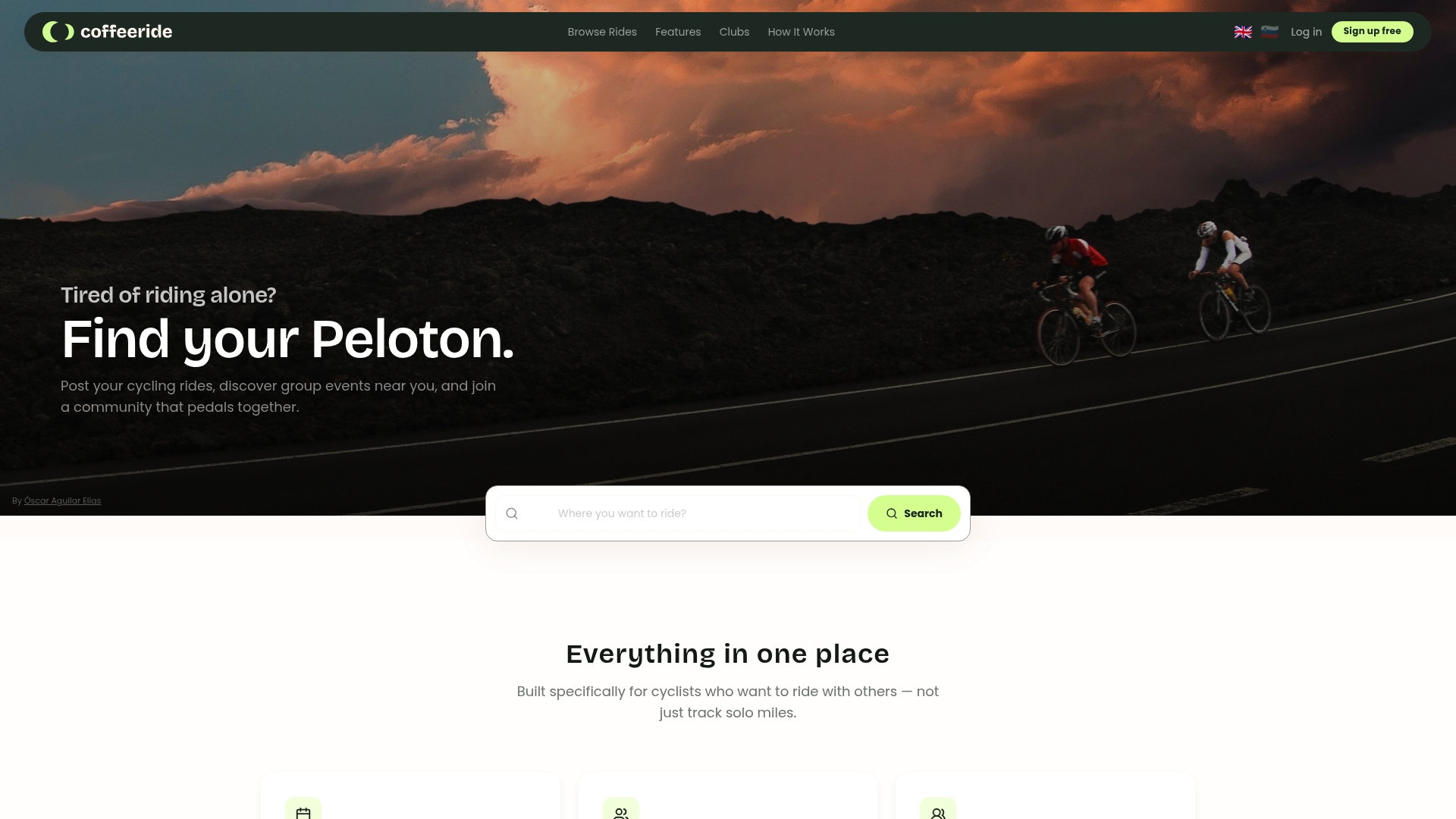
Browsing scattered Facebook posts and club websites to find one family-friendly ride near Bled or Radovljica can be time-consuming. Some dedicated cycling platforms combine ride discovery, pace filters, and club messaging in one place to simplify the search and coordination process. Users can create profiles, search for rides by relevant tags, post their own listings, create or join clubs, and discover local events and groups more efficiently.
Start your free profile on Coffeeride and find your family’s next ride.
Sources
- Slovenia
- Concept for training and cycling exam in primary school (kolesarski izpit) — Ministry of Education (Slovenia)
- Družinsko kolesarjenje 2026 L’Etape Slovenia
- Polarized
FAQ
What is the 80% rule in cycling?
The 80% rule refers to a polarized training pattern where about 80% of riding time stays at an easy, conversational pace and only 20% involves harder efforts. For family rides, the practical takeaway is simple: keep the pace easy enough that everyone can talk comfortably while riding, especially with kids along.
Why is Slovenia known for strong cycling culture?
Slovenia’s cycling strength is often linked to early school-based cycling education, including the structured kolesarski izpit program, combined with an active club network that supports young riders from an early age. That foundation gives families a practical head start when introducing kids to group rides.
What is the kolesarski izpit and when do kids take it?
The kolesarski izpit is a school-based cycling test that combines traffic-rule instruction with supervised practical riding in small groups, led by a trained teacher on public roads near the school. Schools coordinate directly with parents and adjust the program for children with special needs.
How do I find a family-friendly cycling group near me in Slovenia?
Check local cycling clubs and municipal programs first, then look at organized events like L’Etape Slovenia’s family ride for a structured, escorted option. Community platforms such as Coffeeride let you filter rides by pace and family tags, which makes matching with the right group far faster than scrolling social media.
Are there organized family cycling events in Slovenia?
Yes, events like the L’Etape Slovenia family ride offer a non-competitive 12.5 kilometer route with an escort vehicle and no overtaking allowed, which keeps the group together at a controlled pace. Pre-registration is required, and guardians typically need to collect a minor’s start number in person on event day.