Find Cycling Buddies for Free: Match Pace, Join Clubs, Ride Safer
· 10 min read

The fastest ways to find cycling buddies are local clubs, ride-posting apps, bike shops, and community events, and most of this discovery costs nothing. Match by pace and discipline first, since a mismatched group kills the fun faster than a flat tire. Ready to see exactly where to look? The next section breaks down each channel and what to expect from it.
TL;DR:
- Most cycling buddy options through clubs, apps, and events are free and focus on matching riders by pace, discipline, and location to ensure compatibility.
- Group ride safety depends on clear communication, proper leadership, and established regrouping policies, with recommended ratios of one leader per six to eight riders.
- Asking about a group’s regrouping policy before your first ride can prevent surprises, as some groups wait at junctions while others do not.
- Using discipline-specific online forums and social groups increases chances of finding niche rides, race series, or trail groups suited to your interests and skill level.
- Creating a profile on platforms like Coffeeride allows you to filter suitable rides, join club chats, and connect with community-organized events quickly and conveniently.
Table of Contents
- Where to look for riding partners and groups
- What to expect from group ride safety and etiquette
- Your step-by-step plan to find and join a riding buddy
- What the research says about ride leader standards and prep
- Finding your niche through forums and community boards
- A community-first take on riding together
- Find your next ride and club on Coffeeride
- Sources
- FAQ
Where to look for riding partners and groups
Every channel below gets you closer to your crew. Some work fast, others take a ride or two to click, but none of them require a membership fee to try.
- Apps and platforms: Filter by discipline, pace, and distance so you only see rides that fit. Profile verification on platforms adds a layer of trust before you ever meet up, and setting your pace honestly saves everyone a bad first ride.
- Local clubs: Check club pages and event calendars for scheduled group rides. Clubs like Kolesarski klub Kranj, Kolesarski klub Perutnina Ptuj, and Kolesarski klub Rogla run regular rides that welcome newcomers, and showing up to one is often the quickest way into a steady group.
- Bike shops: Ask staff directly about weekly shop rides or coached sessions, and check the noticeboard near the register. Shop rides tend to be casual and forgiving on pace, which makes them a low-pressure entry point.
- Events and charity rides: Sign up for a local fondo or charity ride to meet dozens of riders who share your interests in one morning. Conversations at the start line or rest stop often turn into standing invitations.
- Social and small-group tools: Search Strava clubs, Facebook groups, or local WhatsApp and Telegram threads built around a specific route or discipline. Request to join, introduce yourself briefly, and ask about the next scheduled ride.
Clubs affiliated with the national federation, such as Kolesarski klub Kranj, Kolesarski klub Perutnina Ptuj, and Kolesarski klub Rogla, follow membership structures set by the Cycling Federation of Slovenia’s licensing rules, which is worth a glance if you want to understand how formal club membership works before you commit.
What to expect from group ride safety and etiquette
A well-run group ride has a leader, a plan, and a shared sense of responsibility. Knowing what to expect before you show up helps you relax and focus on the riding.
Ride leaders typically brief the group before rolling out, covering the route, known hazards, regrouping points, and a head count. Standards from Cycling UK’s ride leader handbook recommend a leader-to-rider ratio of about 1:6 for beginner rides and 1:8 for advanced rides, with groups larger than roughly 15 splitting into smaller units.

One leader typically manages up to 6 beginner riders or 8 advanced riders, a ratio built to keep communication clear and response times fast if something goes wrong.
Pre-ride checks matter just as much as the briefing itself:
- Quick bike check: tires, brakes, and quick-release levers before rolling out.
- Confirm regrouping points and what happens if the group splits on a climb or descent.
- Identify the back marker, the rider responsible for making sure no one gets dropped unnoticed.
During the ride, hand signals and verbal calls for hazards, turns, and stopping keep everyone informed, and group-ride guidance treats this as a shared job, not just the leader’s. If you feel unsafe or off pace, say so early: ask for a buddy to ride with you or peel off into a slower subgroup. No serious group will mind the ask.
Your step-by-step plan to find and join a riding buddy
Finding the right group is less about luck and more about doing these steps in order.
- Decide your goals first. Are you after social miles, structured training, gravel exploration, or technical MTB? This decision narrows your search immediately.
- Search with filters. Use pace, discipline, and distance filters on ride-posting apps, browse club calendars, and check event listings for your area.
- Reach out with specific questions. Ask about average pace, ride distance, regrouping policy, and the meeting point before you commit to a ride.
- Show up prepared on ride day. Arrive early, introduce yourself, and offer to help with sign-in or logistics. Small gestures like this make a strong first impression, according to group-ride guidance that recommends new riders pitch in on setup tasks.
- Follow up afterward. Suggest a short repeat ride or ask to join the group chat so the connection sticks.
Pro Tip: Ask about the group’s “regrouping policy” before your first ride. Friendly groups wait at junctions and hilltops, while performance-focused ones may not, and knowing which kind you’re joining saves you a rough surprise.
Cost is rarely a barrier here. Most buddy-finding and social rides are free. Paid options like structured coaching or race-team memberships are a separate track entirely.
What the research says about ride leader standards and prep
The best group rides run on structure, not luck. Cycling UK’s ride leader handbook lays out minimum leader-to-rider ratios and recommends assigning an assistant leader on beginner rides, a small step that makes a measurable difference in how newcomers experience their first outing.
Buddying a newcomer with an experienced rider improves retention and reduces early drop-out from clubs.
That single practice, pairing a new rider with someone experienced, does more for retention than almost anything else a club can offer. Clear regrouping policies work the same way: riders who know exactly where the group will wait for them stop worrying about getting left behind, which keeps them coming back. Safety guidance from Slovenia’s police bicycle safety resources reinforces that group riding carries its own hazards, and if you need help with legal steps after a crash, a bicycle accident lawyer Colorado Springs can provide support to claim after an accident.
Finding your niche through forums and community boards
Road racing, gravel, and mountain biking each have their own online gathering spots, and they’re often better for niche questions than a general club page. Reddit communities built around specific disciplines, dedicated MTB forums, and Strava club groups organized by terrain type let you ask pointed questions: which trail has the best flow after rain, which race series suits a first-timer, or which climb gets crowded on weekends.
These spaces work best when you search before you post. Most forums have years of archived threads on local routes, gear swaps, and meetup logistics, so a quick search often surfaces a ready-made answer or an active thread you can jump into. When you do post, be specific about your discipline and location interest rather than asking a broad “anyone want to ride” question, since specificity gets faster, more useful replies.
Facebook groups organized around a single discipline, like a regional gravel-riding group or a downhill MTB crew, tend to be more active than general cycling pages. They’re also where a lot of informal race-day carpools and trail-clearing meetups get organized, so joining a couple of the right ones can fill your calendar faster than any single app search.

A community-first take on riding together
Group rides work best when everyone has a place, not just the fastest riders. Discipline filters and women-only and para-cycling rides exist because pace and comfort matter as much as distance. Give newcomers a buddy and an assistant leader, and watch how much faster they stick around.
— Coffeeride
Find your next ride and club on Coffeeride
Coffeeride makes the search part effortless so you can focus on the riding part. Create a profile, set your discipline and pace, and start browsing beginner-friendly rides near you in minutes.
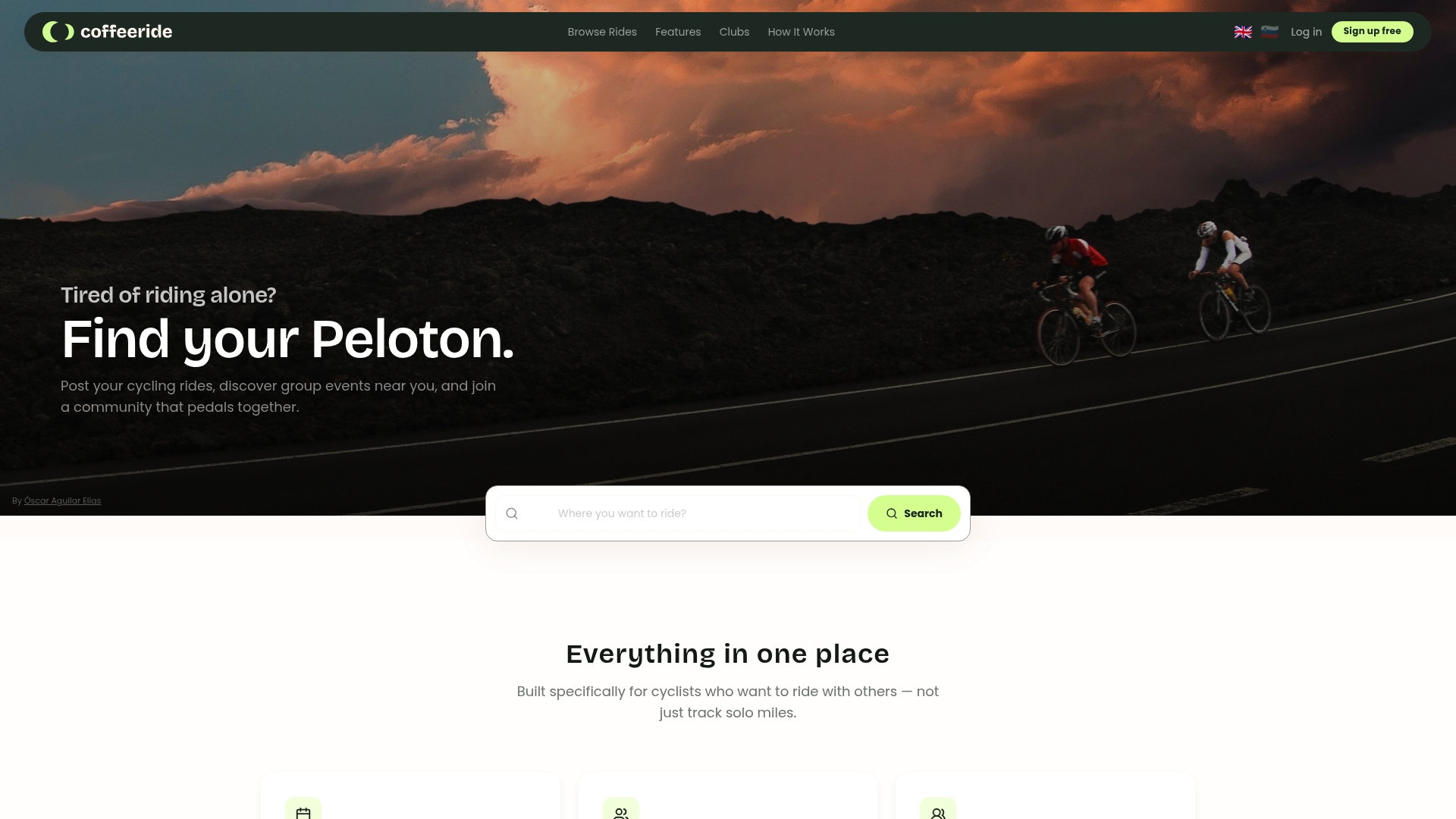
Here’s how to get rolling:
- Create a profile and set your preferred discipline, whether that’s road, gravel, MTB, or a mix.
- Filter by pace and distance so every ride you see actually fits your fitness and goals.
- Join club chats to stay looped in on recurring rides, events, and last-minute changes.
- Browse women-only and para-cycling rides built with privacy and comfort in mind.
Unlike scattered Facebook threads or a single club’s calendar, some platforms put discovery, club management, and ride chat in one place. Create your free profile on Coffeeride and find your next riding buddy this week.
Sources
The guidance in this article draws on published ride leader standards and official safety resources, along with local club and federation pages worth bookmarking.
- Cycling UK ride leader standards handbook
- PRAVILNIK O LICENCIRANJU KOLESARSKE ZVEZE SLOVENIJE
- Guidance on group riding and safety (GOC)
- Slovenia police bicycle safety guidance
FAQ
How can I find a cycling buddy?
Start with local clubs, ride-posting apps, bike shop noticeboards, and community events, since these are the fastest and usually free ways to meet riders. Filter by pace and discipline so you connect with people whose rides actually match your fitness and goals. A short ride or two with a group is usually enough to know if it’s a fit.
What is the 75% rule in cycling?
Definitions of this rule vary across cycling communities and aren’t tied to a single official standard. A common informal version suggests keeping most training rides at a comfortable, conversational effort rather than pushing hard every time out. Check with your specific club or coach for the version they follow.
How much does a bike buddy cost?
Most buddy-finding and group rides are free, whether you connect through a club, an app, or a community event. Paid options exist separately, mainly for structured coaching or competitive race-team memberships, which are a different track from casual social riding.
Is there a dating site for cyclists?
Some platforms are built for finding riding companions and clubs, not romantic matchmaking, with filters for pace, discipline, and ride type. If your goal is finding people to train or explore routes with, that’s the kind of connection these discovery platforms are designed for.