8 steps to start a cycling club in Slovenia, test first with Coffeeride
· 14 min read

Declare your club’s mission, then pick a path: run an informal pilot ride while you prepare paperwork, or register right away as a formal društvo if you need a bank account, insurance access, or event sponsorships. Formal registration runs through your local administrative unit and AJPES, and affiliating with the national federation is optional but worth doing for the insurance access it opens up. Before your first wheel turns, lock down ride leaders and basic safety rules.
TL;DR:
- Running an informal pilot ride first allows testing interest with minimal administrative effort before committing to registration.
- Registering a club involves submitting documentation like a founding assembly record, club statute, and member details through local authorities and AJPES.
- Affiliating with the national federation is optional but necessary for insurance access, competition licenses, and grants, and requires submitting registration confirmation.
- A minimal governance structure with four roles—chair, secretary, treasurer, and ride coordinator—supports sustainability and clear responsibility distribution.
- Building a written risk management plan, including sign-in sheets and incident logs, enhances safety and insurance claims readiness for group rides.
Table of Contents
- Quick checklist: first 5-8 steps to launch a club
- How to register legally and affiliate with the national federation
- Governance and roles: a minimal committee and simple constitution
- Safety, insurance, and ride-leader best practices
- How to plan and run rides: formats, pace groups and routing
- Recruiting and retention: how to grow an inclusive membership
- Admin essentials: handling money, bookkeeping and optional public-interest status
- First-ride template and day-one checklist organizers can copy
- How a community platform like Coffeeride reduces organizer workload
- Coffeeride perspective: why basic governance and safety matter
- Coffeeride Club: a platform built for managing rides and members
- FAQ
- Sources
Quick checklist: first 5-8 steps to launch a club
Every club starts the same way: someone decides riding together beats riding alone. Turning that idea into a functioning club takes a handful of concrete moves, usually spread across your first one to three months.
- Write a one-paragraph mission statement that defines who the club serves (road, gravel, women-only, mixed-ability) and decide whether you need registered status now or can start informal.
- If registering, begin the paperwork: the administrative unit filing and the AJPES notification that follows it.
- If staying informal for now, schedule a pilot ride to test interest before committing to paperwork.
- Elect a minimal committee: a chair, a secretary, and a treasurer at minimum.
- Set your membership model: free, donation-based, or a small annual fee, and sketch a basic budget.
- Schedule your first two or three rides and publish clear pace and safety expectations.
- Recruit a ride leader for each scheduled ride before you publish it.
- Collect feedback after the first rides and adjust format, pace groups, or timing accordingly.
This sequence keeps you moving without forcing a registration decision before you know whether the club has legs.
How to register legally and affiliate with the national federation
Registering a cycling club in Slovenia means forming a društvo, a nonprofit association, and the process has a clear sequence. You first file with your local administrative unit (upravna enota), which approves the association’s statute and issues a registration decision. That decision then gets reported to AJPES, which records the organization and gives it an official legal identity. Registration through this path is the prerequisite for everything that follows, from opening a bank account to applying for federation affiliation.
You can start the administrative unit filing through the eUprava registration form for associations, which walks you through the application and tells you what to attach.
Typical documentation includes:
- A founding assembly record showing who agreed to establish the club and when.
- A written statute covering mission, membership terms, and governance structure.
- Identification details for the founding members and the person representing the club.
- The registration application itself, submitted through the administrative unit or via eUprava.
Once registered, affiliating with Kolesarska zveza Slovenije (KZS) is optional, but it matters if your members want access to KZS cards, competition licenses, or the insurance components tied to them. KZS asks affiliating clubs for a copy of the registration decision and the AJPES notification before it accepts a club into the federation, according to the KZS licensing rules.
Starting informally first lets you test demand without the administrative load, but it also means no bank account under the club’s name, no access to KZS insurance products, and no eligibility for public-interest status or grants later. Registering immediately gives you legal standing from day one, which matters if you plan to collect membership fees, order equipment under the club’s name, or apply for sponsorship. Many organizers split the difference: run two or three pilot rides informally, confirm there’s real interest, then file the registration paperwork once the group has a track record to point to.
Governance and roles: a minimal committee and simple constitution
A club run by one person burns that person out within a season. Spreading the load across a small committee from the start keeps the club alive past its first few months.
A workable minimum looks like this:
- Chair: sets direction, represents the club externally, and resolves disputes.
- Secretary: handles correspondence, keeps meeting notes, and manages the registration paperwork.
- Treasurer: runs the bank account, tracks fees and expenses, and reports balances to members.
- Membership or ride coordinator: schedules rides, recruits ride leaders, and manages sign-ups.
Four people covering four roles is enough to launch. Meet monthly at first, then quarterly once routines settle, and use simple majority votes for anything beyond routine scheduling.
Your constitution does not need to be long. It should state the club’s mission, how someone becomes and remains a member, what fees cover, who holds each role and how often roles change hands, and a basic process for resolving disagreements between members.
Pro Tip: Draft the constitution before your first paid member joins. Retrofitting rules after people have already paid fees creates friction you can avoid entirely.
If you started as one founder organizing rides solo, transition to the committee model as soon as a second and third person show consistent commitment. Hand over the treasurer role first since it carries the most legal and trust exposure if left with one person indefinitely.
Safety, insurance, and ride-leader best practices
Safety is not a box to check once. It’s the operational habit that determines whether your club still exists in a year.
KZS cards and competition licenses commonly include a basic personal liability insurance component, though the exact coverage varies by license type and organizers should confirm the specifics directly with the federation before promising members anything, according to licensing and insurance guidance. A one-day license is one practical option for event participation, and sample KZS license forms show what documentation and fees that typically involves.
Build a written risk-management plan before your first scheduled ride. At minimum it should include:
- A sign-in sheet capturing name, emergency contact, and a brief acknowledgment of ride risks.
- A designated leader at the front and a tail rider at the back of every group.
- A short log for recording any incident, however minor, with date, names, and what happened.
- A clear point of contact for medical emergencies during the ride.
Group-ride manuals recommend splitting large or mixed-ability groups and briefing riders before departure, a practice detailed in the IAM RoadSmart group rides manual. A workable ratio is one leader and one tail rider per group of a moderate number of riders, with smaller groups recommended for novice or mixed-pace rides.
Store sign-in sheets and incident logs somewhere the treasurer or secretary can retrieve them. If a member ever needs to make an insurance claim through a KZS card, having dated records of who rode, who led, and what happened matters more than any other piece of paperwork you’ll keep.
How to plan and run rides: formats, pace groups and routing
A ride calendar that repeats the same format every week gets stale fast. Vary the format, but keep the structure predictable enough that members know what they’re signing up for.
- Social rides suit mixed-ability groups focused on conversation and coffee stops rather than pace.
- Steady rides hold a consistent moderate pace and work well as the weekly backbone of a club calendar.
- Tempo rides push faster and suit members training for events or fitness goals.
- Novice-only rides give new riders a judgment-free space to build confidence and group-riding skills.
- Women-only rides create a dedicated, comfortable space that broadens who feels welcome to show up.
Describe pace and difficulty plainly in every listing: average speed, total distance, terrain type, and planned stops. A rider deciding whether to join should know in ten seconds whether the ride fits their fitness level.
Route the ride as a loop where possible, so riders who need to peel off early aren’t stranded far from the start. Mark turns clearly or call them out verbally before intersections, build in a rest stop roughly every 15 to 20 miles depending on pace, and route around busy junctions rather than through them.

On ride day, brief the group before rolling out: route, pace, stop locations, and who’s leading and sweeping. Split groups that exceed about twelve riders or that show a wide pace spread once underway. After the ride, a quick thank-you message and a prompt for feedback keeps the loop open for the next event.
Pro Tip: Post the route and pace in the event description, not just verbally at the start. Riders who show up expecting the wrong intensity rarely come back.
Recruiting and retention: how to grow an inclusive membership
Recruiting a cycling club is mostly about showing up in the places riders already look. Retention is about what happens after they show up once.
- Partner with local bike shops to post flyers or host a launch ride starting from their storefront.
- Use community boards, local social media groups, and nearby cycling events to spread the word.
- Pair every new rider with a more experienced member for their first two or three outings.
- Run a women-only ride or an accessible, no-drop option on a regular schedule to widen who feels invited.
- Publish a short code of conduct covering respect, safety, and inclusion so expectations are clear from day one.
Track a few simple numbers: how many riders show up per event, what share of first-timers return for a second ride, and how membership sign-ups trend month over month. A club that retains even a modest share of first-time riders past their second visit tends to build a durable core far faster than one chasing constant new recruitment.
Admin essentials: handling money, bookkeeping and optional public-interest status
Money matters sort themselves out quickly once you’ve registered. Open a bank account under the club’s name once your registration decision is in hand, and keep a simple spreadsheet tracking income and expenses by category: fees, event costs, equipment, insurance.
- Set membership fees to cover concrete costs: insurance access, event expenses, or shared kit, not vague overhead.
- Keep dues modest at first. A low barrier to entry typically helps grow membership more effectively than high fees covering every possible cost upfront.
- Consider applying for “public interest in sport” status once the club has a track record, since it brings access to funding and recognition but also adds periodic reporting obligations, per Gov.
- Set an annual rhythm: a treasurer update each quarter, a membership renewal window, and an annual general meeting to approve the budget and elect or confirm committee roles.
First-ride template and day-one checklist organizers can copy
Your first official ride deserves a simple, repeatable structure so nothing gets missed.
- Collect sign-in details: name, phone number, emergency contact, and a brief risk acknowledgment.
- Brief the group on route, pace, planned stops, and who’s leading and sweeping.
- Ride, keeping the leader/tail structure in place throughout.
- Follow up afterward with a thank-you message, a feedback prompt, and a membership sign-up link.
| Checklist item | Purpose |
|---|---|
| Sign-in sheet | Capture contact and emergency info |
| Pre-ride briefing | Align the group on route and pace |
| Leader/tail assignment | Keep the group together and safe |
| Post-ride follow-up | Convert riders into repeat members |
How a community platform like Coffeeride reduces organizer workload
Scheduling, chasing RSVPs, and matching riders by pace eat up an organizer’s time faster than anything else in club management. A platform designed for managing group rides can absorb much of that overhead.
- Recurring events post once and repeat automatically, instead of being rebuilt in a group chat every week.
- Pace and discipline filters let riders find the right ride without the organizer fielding “is this too fast for me” messages individually.
- Built-in group chat for each ride keeps logistics out of a club-wide feed that buries important details.
- Privacy-protected women-only and para-cycling listings make inclusive programming easy to offer without extra administrative setup.
A simple email list or messaging group still works fine for a handful of riders meeting occasionally. Once you’re running multiple weekly rides with pace variation and recurring sign-ups, using a dedicated tool can save significant time.
Coffeeride perspective: why basic governance and safety matter
We see the same pattern across clubs that last: the ones that survive their first winter are the ones that nailed down roles and safety habits early, not the ones that grew fastest. Skipping governance feels efficient for a month and then costs you the one person who was holding everything together. Treat early admin as an investment in your club’s future, not a distraction from riding. Safety and inclusion aren’t compliance checkboxes. They’re the reason riders come back for a second season, and the reason new members tell their friends to join. Keep listening to what your members tell you after every ride and adjust accordingly.
— Coffeeride
Coffeeride Club: a platform built for managing rides and members
Running a club means juggling scheduling, pace-matching, and constant group messages, and we built Coffeeride specifically to take that load off organizers. Post a ride once and let it repeat automatically. Filter by pace and discipline so riders find their crew without back-and-forth messages. Keep each ride’s conversation in its own group chat instead of one sprawling thread.
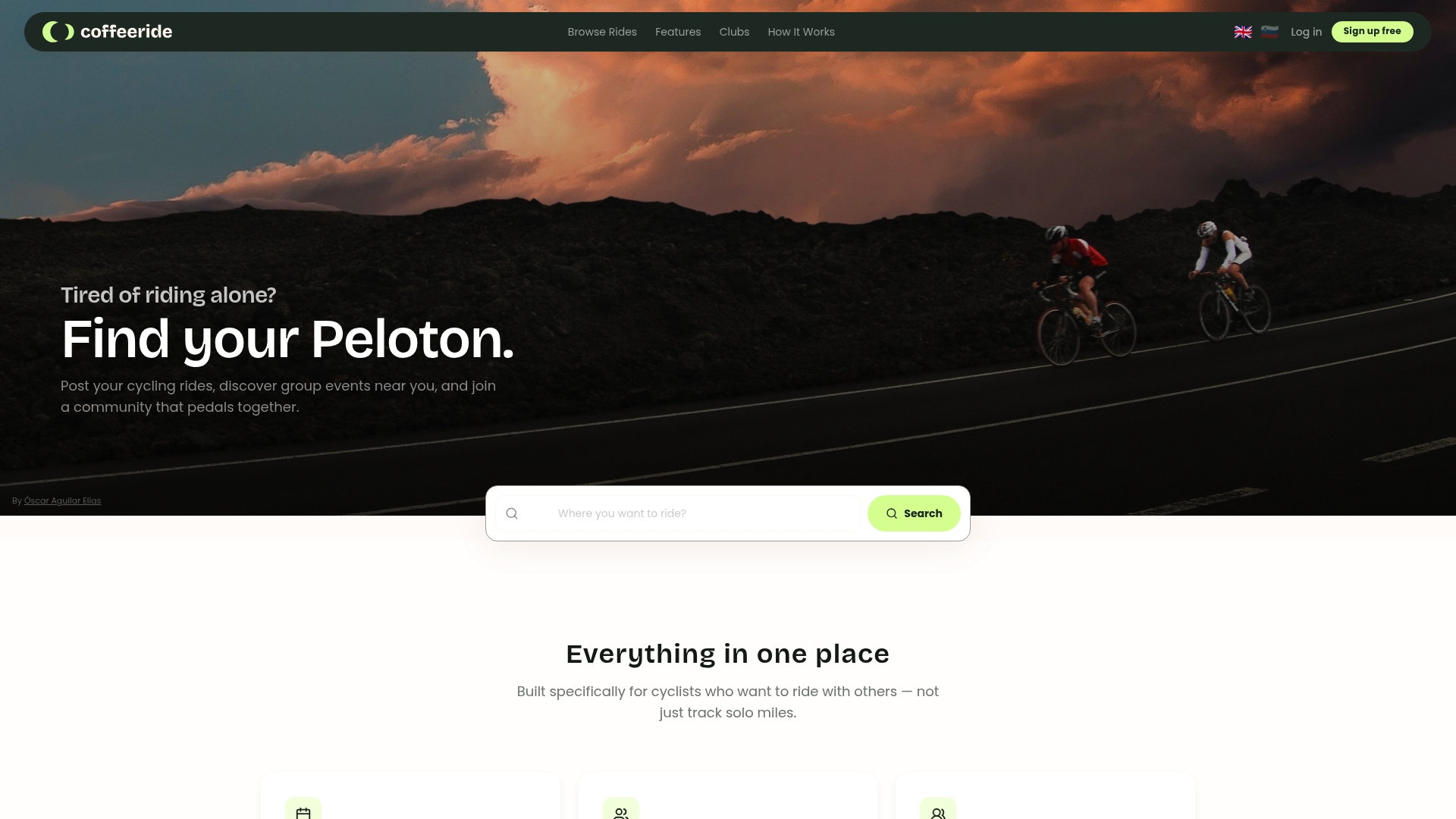
- Post rides and set them to recur automatically, so your calendar stays full without rebuilding it weekly.
- Filter and match riders by pace, discipline, and interest, from road to mountain biking.
- Run group chat per ride to keep logistics organized and searchable.
- Offer women-only and para-cycling rides with built-in privacy protections.
Joining is free. We handle the scheduling and matching so your committee can focus on governance, safety, and the rides themselves. Visit Coffeeride Club to set up your club’s profile and post your first ride.
FAQ
What is the 75% rule in cycling?
Definitions vary across coaching sources, so treat it as a general training principle rather than a fixed club policy.
How do I start a bicycle business?
Starting a bicycle business is a separate undertaking from forming a riding club. It typically involves registering as a business entity, securing a location or online storefront, and sourcing inventory or services, steps that differ substantially from the nonprofit association process used to register a cycling club.
What are the different types of cycling?
Common cycling disciplines include road cycling, mountain biking, gravel riding, track cycling, and cyclocross, each with its own typical terrain, bike setup, and riding style. Clubs often specialize in one discipline or run separate ride formats to serve several of them.
How do I begin cycling for fitness?
Start with short, steady rides at a comfortable pace a few times a week, then gradually add distance or intensity as your fitness builds. Joining a club or a beginner-friendly group ride gives new riders pacing guidance and company, which makes the early months easier to stick with.
Do I need to register my cycling club officially?
Registration isn’t mandatory to start riding together, but it becomes necessary once you want a bank account, formal insurance access, or federation affiliation. Many organizers run an informal pilot first, confirmed through a few group rides, before filing the registration application with their local administrative unit.